





A continent with forest on the plus
The Statistics Poland (GUS) collects a wealth of data on forestry, including foreign forestry, and publishes it annually in a comprehensive publication called the Statistical Yearbook of Forestry (GUS Leśnictwo). This publication is also available on the BDL website (Navigator> Publications>CSO Forestry).
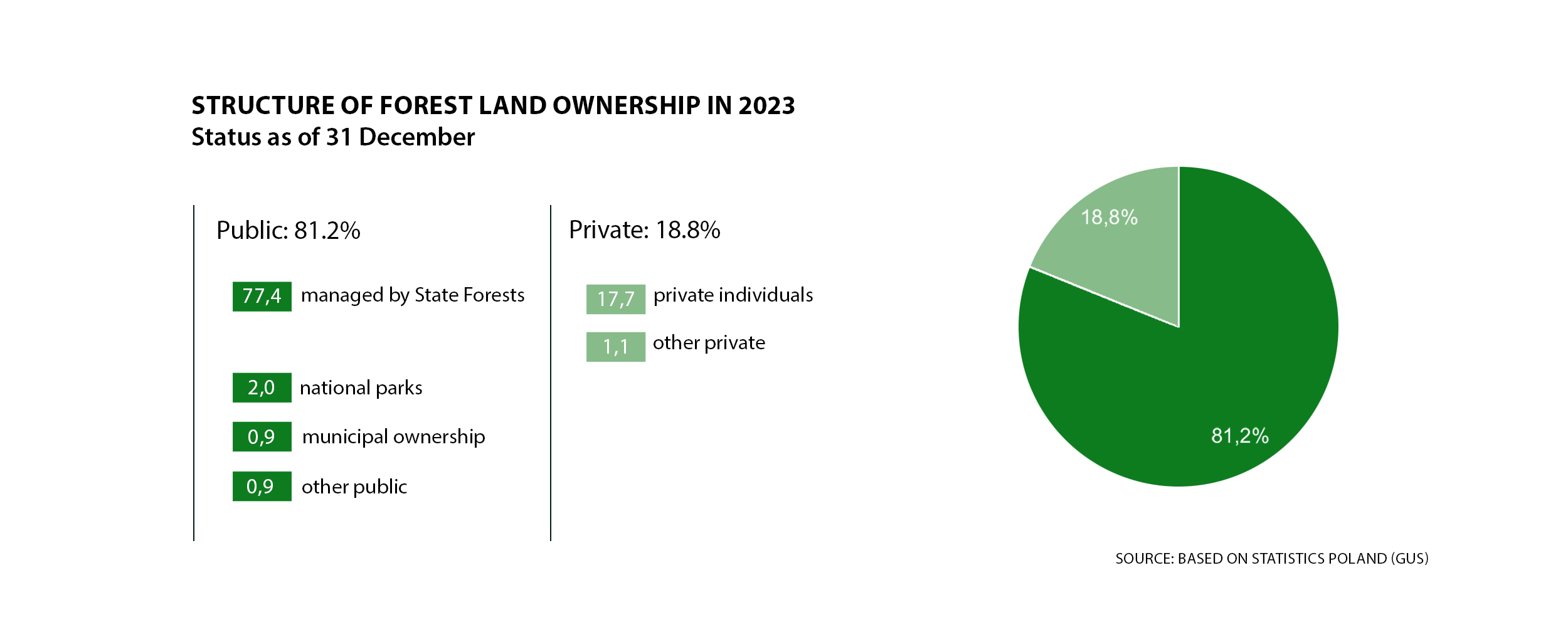
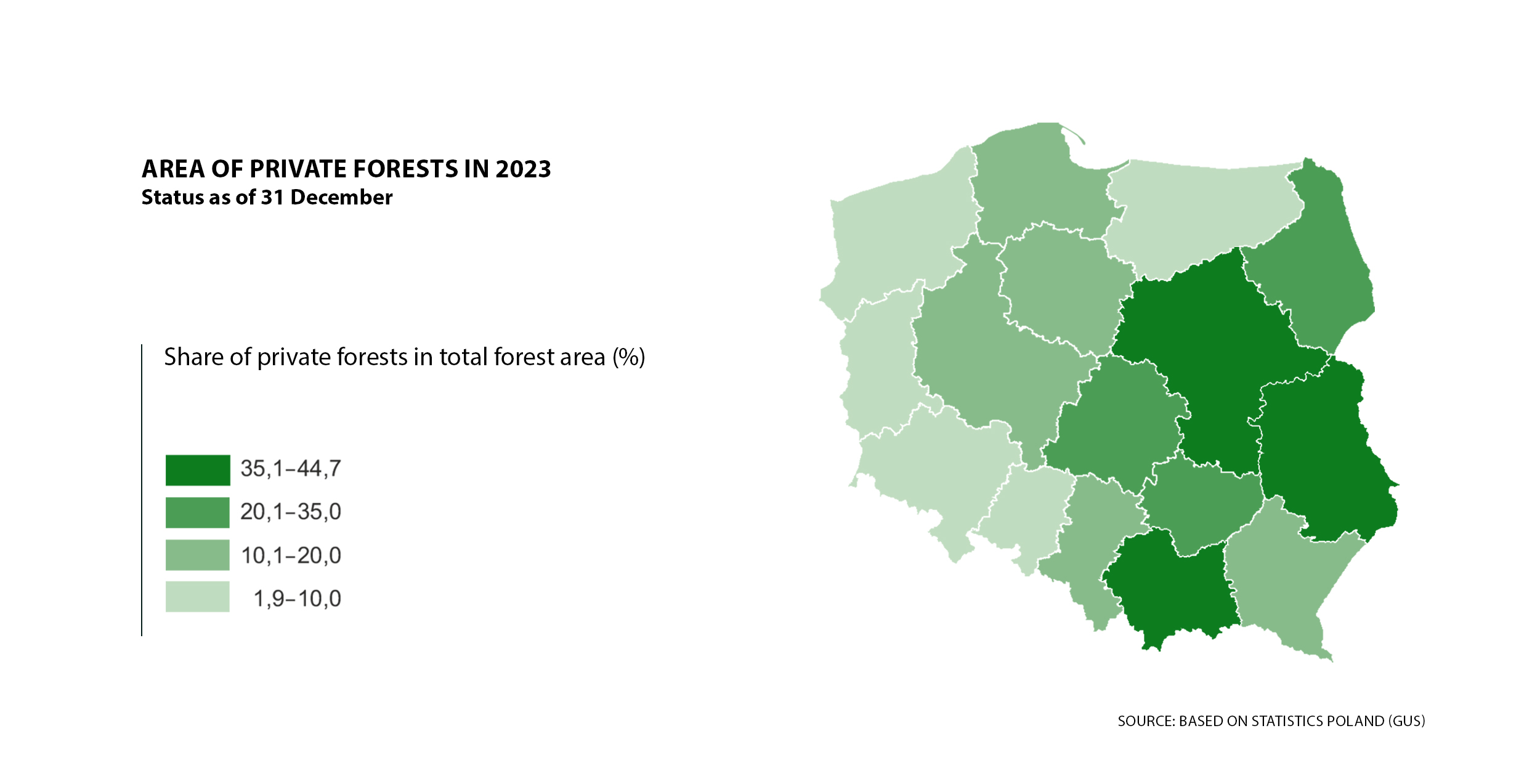
State forests in Poland cover over 80 percent of all native forests. This ratio of public to private forests is rare in Europe, making the Polish model unique in many respects. It is also difficult to compare Polish stands to those abroad, which also have their own unique conditions, impacting their management and protection methods.
How are forest resources developing in Poland? What is the trend? Are forests increasing or decreasing? We should begin this discussion with information about how fast forests are growing in Poland. Inventories show that approximately 9 m³ of timber grows per hectare of forest annually. This data allows for planning the scale of timber harvesting in long-term plans (PUL and UPUL), which currently stands at approximately 6 m³ per hectare. The difference between these two values is significant. Although the forest area does not increase significantly each year, the forest continues to grow. This ensures annual growth, which is compensated for by harvesting in an optimal manner.
Forests in this part of Europe and this climatic and geographical zone are the least disturbed natural formation. They constitute an important factor in ecological balance. They are also a form of land use that ensures biological production with market value, a public good that shapes the quality of life for people.
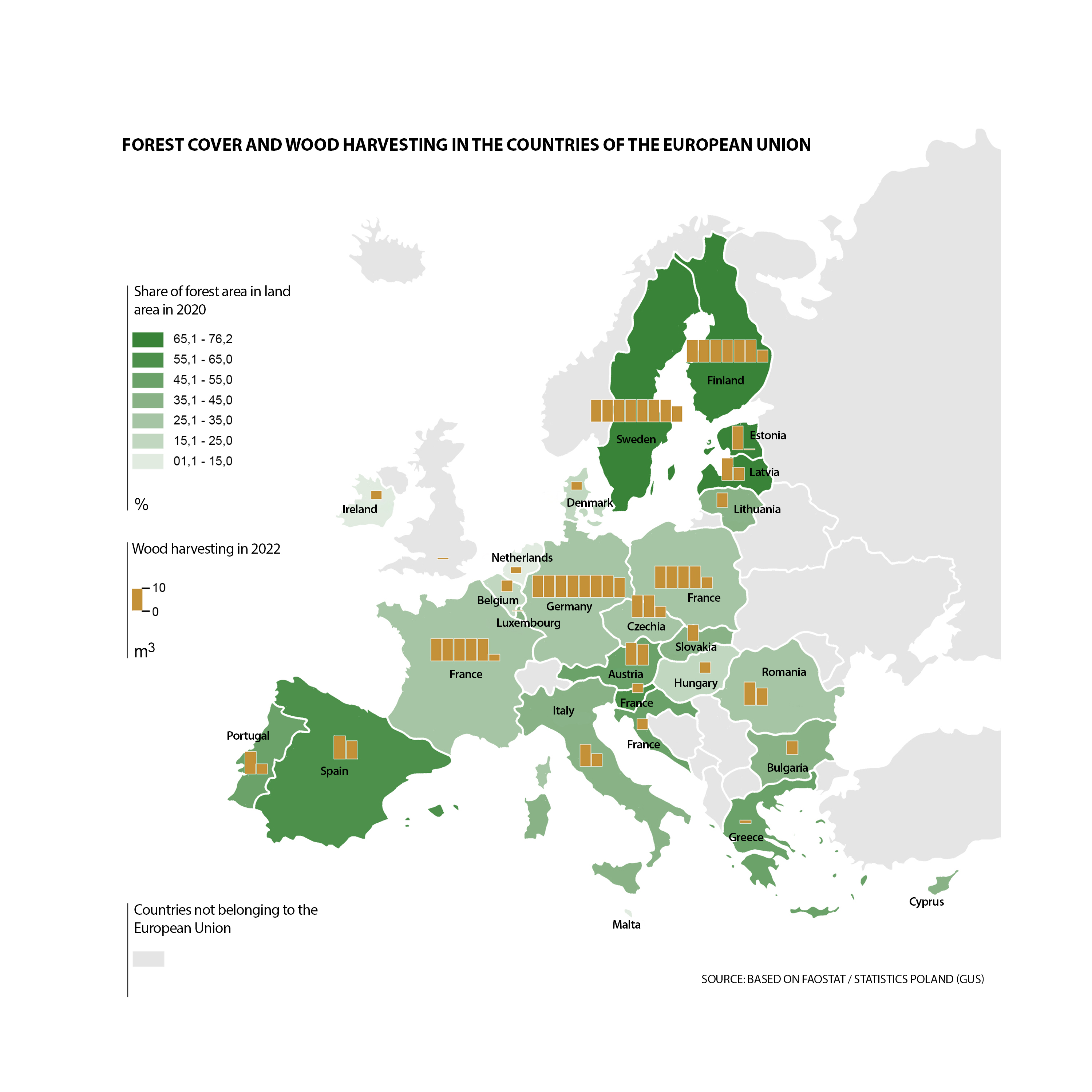
The condition of forests in Poland, compared to European countries and other parts of the world, can be illustrated through measurable parameters in the economic context, such as timber harvesting, timber resources, imports and exports, and environmental context, such as the condition and threats to the forest environment, forest damage, and fires.
The limited availability of current data results from the varying frequency and scope of inventory surveys conducted in individual countries. The presented statistical data may differ from national data. Discrepancies result, among other things, from the use of international UNECE/FAO definitions, developed for all countries, which often do not align with national definitions. In most cases, international organizations compile data obtained from national statistical institutions. These data may be published unchanged or serve as a basis for calculating other figures and indicators by these organizations. Methodological differences in the statistical studies of individual countries mean that the presented data are not always fully comparable. Some data presented in the retrospective differ from previously published data due to verification of data in current editions of the source materials.
Source: Statistics Poland, FAO